Rainy days don’t have to put a damper on your working dog’s training or exercise routine. Building a DIY indoor agility course is a fantastic way to keep your dog active and engaged, even when the weather doesn’t cooperate. Here’s how to set up an indoor course with everyday items and a few must-have tools to turn your home into a canine playground.
Step 1: Plan Your Space Choose a safe and open area in your home. A living room, basement, or garage works well. Ensure there’s enough space for your dog to navigate obstacles without bumping into furniture or walls. Remove any fragile items to avoid accidents.
Step 2: Gather Your Materials
You can use common household items for most of the course, but investing in a few agility-specific tools can enhance the experience. Here are some ideas:
Chairs and Broomsticks: Create simple jumps by resting a broomstick across two chairs.
Or look for adjustable agility jumps like those used for agility classes.
Hula Hoops: Use hula hoops as jump-through rings or to teach your dog to step through obstacles. You can also look for durable training hoops.
A kids’ play tunnel: A kids play tunnel can serve as a fun crawl-through element or look for affordable dog agility tunnels.
Cushions and Pillows: Stack these to create a balance challenge or small climbing obstacle.
Boxes and Laundry Baskets: Use these as obstacles for weaving or as targets for your dog to jump over.
PVC Pipes: If you’re handy, build a custom weave pole set with PVC pipes or purchase pre-made weave poles.
Step 3: Design Your Course
Set up a course that includes a variety of elements, such as:
1. Jumping Obstacles: Use broomsticks or adjustable jumps for your dog to leap over.
2. Weave Poles: Create a slalom with PVC pipes or household items like bottles.
3. Crawling Tunnel: Add a kids’ play tunnel or construct one with blankets and chairs.
4. Pause Box: Teach your dog to pause on a marked mat or blanket.
5. Balance Beam: Use a sturdy plank set on low supports for balance practice.
Step 4: Train and Play
Start with one obstacle at a time to ensure your dog understands each element. Use treats and positive reinforcement to guide them through. Gradually link the obstacles together into a full course as your dog becomes more confident.
Step 5: Add Variety
Change the course layout every few days to keep your dog interested. You can also increase the difficulty by raising jump heights or spacing out weave poles.
Helpful Tips
– Always supervise your dog while they navigate the course.
– Keep training sessions short (10-15 minutes) to avoid overexertion.
– Make sure all obstacles are stable to prevent injuries.
-NOTE: Always check with you veterinarian prior to taking your dog over jumps. It’s better to be safe than sorry. Young dogs and older dogs can often be at risk of harm if their joints aren’t mature or have been weakened with age or prior stress or past injuries.
Final Thoughts:
An indoor agility course is a wonderful way to bond with your dog, keep them physically and mentally engaged, and sharpen their skills even on the gloomiest days. With a little creativity and effort, you can provide endless fun and enrichment for your working dog at home.


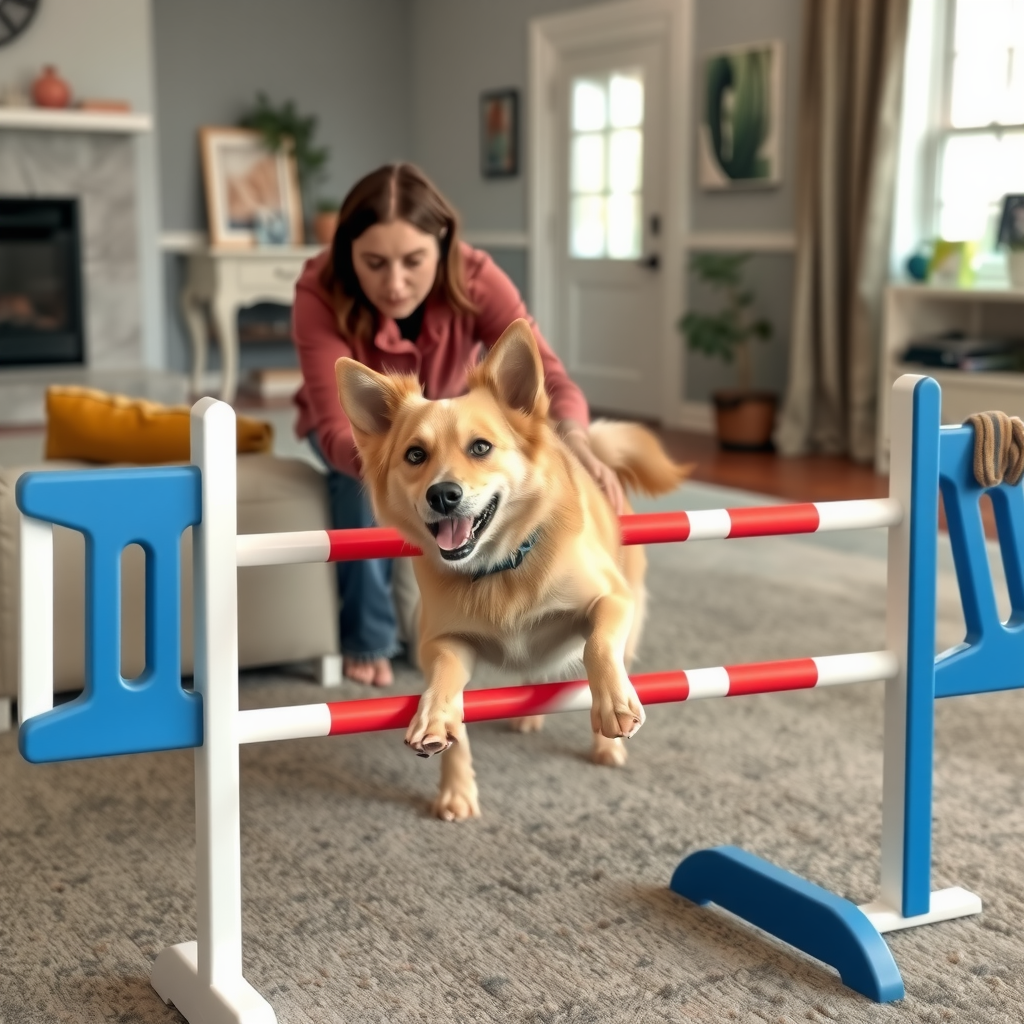
 Dog Agility Training Equipment, 60-Piece Dog Obstacle Course